
Every farm is shaped, in part, by what is available to it. We may admire a design in a book or magazine, but sooner or later we must build with the materials we can find, afford, and carry home. The usefulness of any farm structure depends not only upon it’s design but also upon it’s fitness for the place where it is built.
The well-known pasture chicken tractor popularized by Joel Salatin is a good example. It’s success rests on a simple idea: a shelter light enough to move often, allowing chickens continual access to fresh grass while spreading their manure across the pasture. The design serves both the birds and the land.

The original tractor makes use of aluminum roofing, a sensible choice where it can be readily obtained. Aluminum is light, durable, and easy to move. Yet many builders discover that aluminum is either expensive or difficult to find. The question then becomes not whether the design can be copied exactly, but how it can be adapted while preserving its purpose.
The first alternative many people consider is corrugated steel roofing. Steel has much to recommend it. It lasts a long time, resists weather well, and can be found in nearly every community. A steel roof inspires confidence during a storm.
It’s disadvantage is also obvious. Steel is heavy.
A chicken tractor may look manageable in the workshop, but weight reveals itself on a wet morning when the pasture is soft and the birds are grown. What is merely heavy becomes difficult. What is difficult becomes neglected. The daily movement that makes the system work may gradually become less frequent.
For this reason, every additional pound deserves consideration.

Another possibility is corrugated PVC paneling. These panels are light enough that a large section can be carried under one arm. They do not rust and are generally affordable. For the builder seeking mobility above all else, they are attractive.
Yet lightness has its own price. When used as roofing, PVC lacks the rigidity of metal. During a hard rain, water can collect in shallow depressions and cause the panels to sag. Over time, this repeated strain may shorten their useful life. To avoid this problem, additional supports are often required, and soon some of the advantage of their light weight has been exchanged for added framing.
After several seasons of use, we have found a middle path.
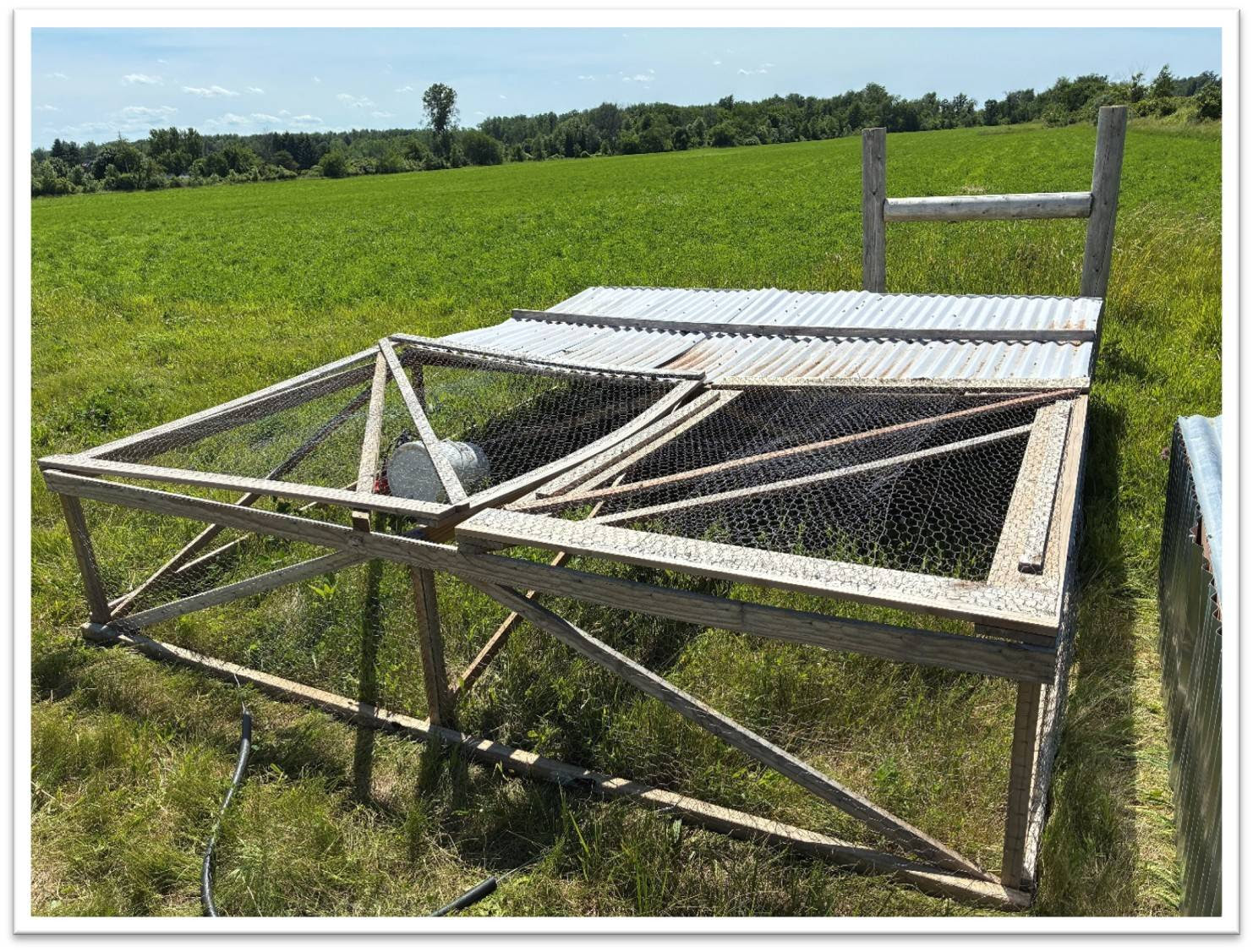
Our tractors are roofed with 29-gauge ribbed steel panels. Though steel is heavier than aluminum, these lighter-gauge panels provide a practical balance of strength and weight. Two panels, costing roughly sixty dollars, will cover most of the roof area required for a Salatin-style tractor. The result is a roof sturdy enough to withstand weather and years of use without making the structure unreasonably heavy.

Where additional enclosure is needed, corrugated PVC panels can be used for the rear wall and other vertical surfaces. In those locations they provide protection without carrying the burden of supporting rainwater. The material is put to work where it’s strengths are useful and it’s weaknesses matter less.
For our own tractors, however, we have largely dispensed with side walls altogether.
Summer teaches it’s own lessons. On hot afternoons, a breeze moving through an open structure does more for the comfort of the birds than another layer of material. The open sided tractor remains cooler, dries more quickly after rain, and allows fresh air to circulate freely. The chickens seem to prefer it, and the caretaker soon learns to prefer it as well.
This arrangement—a ribbed steel roof, an optional rear panel, and open sides—has proven both practical and durable. It is not a perfect copy of another person’s design. Rather, it is an adaptation shaped by experience, weather, available materials, and the daily work of caring for birds on pasture.

That, perhaps, is how most good farm improvements come about. We begin with an idea borrowed from somewhere else. Then the realities of our own place take hold of it. The result is not the original design, nor should it be. It is a structure fitted to it’s landscape and it’s purpose, which is the highest praise any farm tool can receive.

With Our Appreciation
Pete, Liz, and Family
Visit Our Online Farm Store

Ready for pasture-raised goodness? Check out our farm store to stock up on chicken, eggs, and more—all raised with care, right here at Osage Grove Farms.